
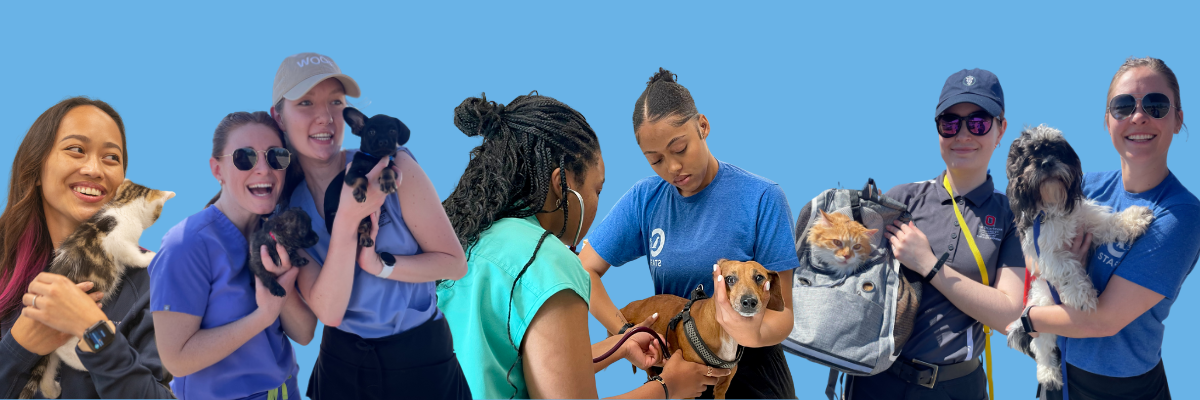
Free Pet Vaccine & Pet Food Clinics
Offering core vaccines and supplemental pet food*


When pets receive core vaccinations, they are more likely to stay safe, healthy, and at home with the families who love them. Your support of our community vaccine clinics helps make this possible.
This season, our goal is to raise $10,000 to continue providing lifesaving vaccines to pets in our community while vaccinating at least 2,500 pets. Even a gift of $5 can help protect a pet from preventable disease and move us one step closer to a healthier community for people and pets.
For the latest updates, please follow our events on our Facebook page.
Important Details
Wait times vary. Please plan ahead as pets can overheat in hot weather. Bring water for your pets. If your pet is experiencing symptoms of heatstroke, notify a staff member immediately.
All pets must be leashed, crated, or contained.
Vaccines available while supplies last.
Donations are accepted at all clinics and greatly appreciated.
When you arrive, please follow the orange signs and enter the drive-thru line for service.
*Supplemental Pet Food is not available at all clinics. Please read event details for more information on which events will have pet food available. Available while supplies last.
2026 Schedule
Tuesday, March 17, 2026 | The Columbus Humane Essential Care Center | 11:00 am-2:00 pm
3772 South High Street, Columbus, OH 43207
Vaccines and supplemental pet food
Tuesday, April 14, 2026 | Fortress Obetz | 11:00 am-2:00 pm
2015 Recreation Trl, Obetz, OH 43207
Core vaccines only
Tuesday, May 26, 2026 | Potter’s House Church | 11:00 am-2:00 pm
3220 Lowell Drive, Columbus, OH 43204
Core vaccines only
Tuesday, June 23, 2026 | Hilliard Fairgrounds | 11:00 am-2:00 pm
4100 Columbia St, Hilliard, OH 43026
Core vaccines only
CANCELED: Tuesday, July 21, 2026 | Hilliard Bradley High School | 11:00am-2:00pm
2800 Walker Rd, Hilliard, OH 43026
Core vaccines only
Tuesday, August 18, 2026 | Vineyard Columbus | 11:00am-2:00pm
6000 Cooper Rd, Westerville, OH 43081
Core vaccines only
Thursday, September 24, 2026 | Historic Crew Stadium | 11:00 am-2:00 pm
One Black and Gold Blvd, Columbus, OH 43211
Core vaccines only
Tuesday, October 27, 2026 | Blacklick Woods Golf Course | 11:00am-2:00pm
7309 E Livingston Avenue, Reynoldsburg, OH 43068
Core vaccines only
More dates coming soon.
Vaccine Eligibility
Rabies 1-Year: Dogs and cats 12 weeks+
DAPP/ FVRCP: Dogs and cats 6 weeks+
How Often Is the Rabies Vaccine Needed?
First Dose: Dogs and cats should receive their first rabies vaccine at 3–4 months old.
Booster Schedule:
The first booster is required one year later.
After that, your pet may be eligible for a 3-year rabies vaccine, depending on local laws and vaccine type.
How Often Does My Cat Need the FVRCP Vaccine?
Kittens should start their FVRCP series at 6–8 weeks of age, receiving boosters every 3–4 weeks until at least 16–20 weeks old.
Adult cats get a booster 1 year after the kitten series, then typically every 3 years, depending on age, health, and lifestyle.
How Often Does My Dog Need the DAPP Vaccine?
Puppies need a series of DAPP vaccines, starting as early as 6–8 weeks old and continuing every 3–4 weeks until at least 16 weeks of age.
Adult dogs typically receive a booster one year after the initial series, then every 1–3 years depending on age, health, and risk.
rabies Vaccine Information
What is Rabies?
Rabies is a fatal viral disease that affects the brain and nervous system of mammals, including dogs, cats, wildlife, and humans. It is spread primarily through the bite or saliva of an infected animal. Once symptoms appear, rabies is nearly always fatal—but it is entirely preventable through vaccination.
Why Is the Rabies Vaccine Important?
While Ohio does not have a statewide rabies vaccination law, many cities and counties (including Franklin County) require dogs and cats over a certain age to be vaccinated. The rabies vaccine saves lives. Rabies vaccination is the only way to protect your pet—and your family—against this deadly disease.
Vaccinating your pets for rabies prevents public health risks. If an unvaccinated pet is exposed to a wild animal or bites someone, it may be subject to long quarantines or even euthanasia.
What to Expect After Vaccination
Most pets show no side effects, but mild and temporary symptoms can occur:
Soreness at the injection site
Mild tiredness or reduced appetite for a day or two
Seek immediate veterinary care if your pet shows any of the following:
Vomiting, facial swelling, or hives
Difficulty breathing or collapse
How Often Is the Rabies Vaccine Needed?
First Dose: Dogs and cats should receive their first rabies vaccine at 3–4 months old.
Booster Schedule:
The first booster is required one year later.
After that, your pet may be eligible for a 3-year rabies vaccine, depending on local laws and vaccine type.
FVRCP Vaccine Information
What is the FVRCP Vaccine?
The FVRCP vaccine is a core vaccine that protects cats from three serious and contagious diseases:
FVR – Feline Viral Rhinotracheitis (Herpesvirus): A common upper respiratory infection that causes sneezing, nasal/eye discharge, and fever. It can become chronic and flare up during stress.
C – Calicivirus: A virus that causes respiratory illness, mouth ulcers, and joint pain. Some strains can be severe and even fatal
P – Panleukopenia (Feline Distemper): A highly contagious and deadly virus that attacks the immune system and gastrointestinal tract. Especially dangerous for kittens.
Why Is the FVRCP Vaccine Important?
These diseases can spread through the air, direct contact, shared bedding, bowls, or even on human clothing. Indoor cats are still at risk and should be vaccinated. The FVRCP vaccine is the best way to protect your cat from serious illness.
What to Expect After Vaccination
Most cats tolerate vaccines very well. Mild side effects may include:
Sleepiness or low energy for 24–48 hours
Mild soreness at the injection site
Temporary decrease in appetite
Contact a veterinarian immediately if your cat experiences:
Vomiting or diarrhea
Swelling of the face or difficulty breathing
Hives or collapse
How Often Does My Cat Need the FVRCP Vaccine?
Kittens should start their FVRCP series at 6–8 weeks of age, receiving boosters every 3–4 weeks until at least 16–20 weeks old.
Adult cats get a booster 1 year after the kitten series, then typically every 3 years, depending on age, health, and lifestyle.
DAPP Vaccine Information
What is the DAPP Vaccine?
The DAPP vaccine is a combination vaccine that protects your dog against four serious and highly contagious viruses:
D – Distemper: A virus that affects the lungs, brain, and intestines. It is often fatal and has no cure.
A – Adenovirus (Hepatitis): A disease that causes liver damage and can lead to death.
P – Parainfluenza: A respiratory virus that contributes to kennel cough.
P – Parvovirus: A severe gastrointestinal virus that causes vomiting, diarrhea, and often requires hospitalization. It can be deadly, especially in puppies.
Why Is This Vaccine Important?
These diseases are highly contagious and can be life-threatening—especially in young, unvaccinated dogs. Vaccination is the best way to protect your pet and prevent outbreaks in our community.
What to Expect After Vaccination
Most pets do great after receiving vaccines. However, mild side effects can occur, including:
Slight soreness or swelling at the injection site
Fatigue or mild fever
Decreased appetite for a day
These symptoms usually go away within 24–48 hours. If your dog experiences vomiting, swelling of the face, hives, or difficulty breathing, contact your veterinarian or an emergency clinic immediately.
How Often Does My Dog Need the DAPP Vaccine?
Puppies need a series of DAPP vaccines, starting as early as 6–8 weeks old and continuing every 3–4 weeks until at least 16 weeks of age.
Adult dogs typically receive a booster one year after the initial series, then every 1–3 years depending on age, health, and risk.


IS THIS AN EMERGENCY?
If this is a life-threatening emergency, call an emergency veterinarian immediately. Emergency veterinary options in Columbus are here or call Ohio State University Veterinary Medical Center Emergency at (614) 292-3551 or MedVet Hilliard at (614) 870-0480 or MedVet Columbus at (614) 846-5800 or MedVet Diley Hill at (614) 829-6444.